AIARE Avalanche Rescue Course in New Hampshire
Practice the skills required to respond when someone is buried in an avalanche. The AIARE Avalanche Rescue Course in New Hampshire is a focused, one-day program built around companion rescue: transceiver searching, probing, strategic shoveling, rescue organization, and realistic rescue scenarios.
Courses take place in the Mount Washington region of the White Mountains and are led by IFMGA Mountain Guide and AIARE Course Leader Paul Rachele. The course is appropriate both for people learning avalanche rescue for the first time and experienced backcountry travelers who want to improve or refresh skills they may rarely use.
What Is the AIARE Avalanche Rescue Course?
Avalanche Rescue is a one-day course devoted specifically to companion rescue.
If someone in your group is caught and buried, rescue immediately becomes a problem of execution: assessing the scene, locating the buried person, probing accurately, excavating efficiently, communicating clearly, and organizing other rescuers.
Those are physical skills.
They improve through deliberate practice.
During the course, students work through individual techniques and then combine them in increasingly realistic scenarios.
The objective is not simply to understand avalanche rescue. It is to become faster, more organized, and more effective at performing it.
Avalanche Rescue Skills You Will Practice
Training includes:
Avalanche transceiver use
Signal-search techniques
Coarse and fine searching
Pinpointing a burial with a probe
Strategic shoveling
Scene assessment
Small-team rescue organization
Communication during a rescue
Single-burial scenarios
More complex rescue problems
Timed rescue practice
Scenario setup for future practice
Developing a continuing rescue-practice plan
Students receive feedback throughout the course so they can identify inefficiencies and continue improving after the program.
Transceiver Search Practice
Owning an avalanche transceiver is not the same as being proficient with one.
The course gives students repeated opportunities to use their own equipment and work through the complete search process.
You will practice moving from the initial response through signal acquisition, coarse search, fine search, probing, and excavation.
The emphasis is on building a sequence that remains organized when the problem becomes stressful.
Probing and Strategic Shoveling
Locating the strongest transceiver signal is only part of an avalanche rescue.
Accurate probing confirms the burial location, and excavation can consume a substantial portion of the rescue.
Students practice probe technique and efficient shoveling systems designed to move snow effectively while maintaining organization around the buried person.
Small changes in technique and positioning can make the entire rescue process more efficient.
Realistic Avalanche Rescue Scenarios
Much of the course is scenario based.
After practicing individual skills, students combine them in rescue problems designed to require communication, leadership, equipment management, and teamwork.
Scenarios provide an opportunity to identify mistakes and inefficiencies that may not become obvious during isolated beacon drills.
Students who already have rescue experience can use the course to refine systems and work through more demanding problems.
Who Should Take Avalanche Rescue?
The course is useful for anyone who travels in or near avalanche terrain, including:
Backcountry skiers
Splitboarders
Ski mountaineers
Ice climbers
Alpine climbers
Mountaineers
Other winter backcountry travelers
No previous AIARE course is required. The course can serve as an introduction to companion rescue or as a refresher for someone who has practiced these skills for years. It is also part of the progression toward AIARE 2.
Avalanche Rescue Course Prerequisites
There is no previous avalanche-course prerequisite.
Participants need to be capable of traveling over snow in winter conditions and arrive with appropriate winter travel equipment.
Students need avalanche rescue equipment including:
Avalanche transceiver
Shovel
Probe
A complete equipment list is provided before the course.
Rescue Skills Need Practice
Companion rescue is different from many of the skills used routinely during a backcountry day.
Ideally, you will never need to perform a real avalanche rescue.
That also means the skill can become rusty unless you deliberately practice it.
AIARE specifically describes Avalanche Rescue as both a place to learn rescue skills and an opportunity for experienced users to keep those skills current.
The course also teaches students how to build realistic practice scenarios so rescue training can continue throughout the season.
Avalanche Rescue Training on Mount Washington
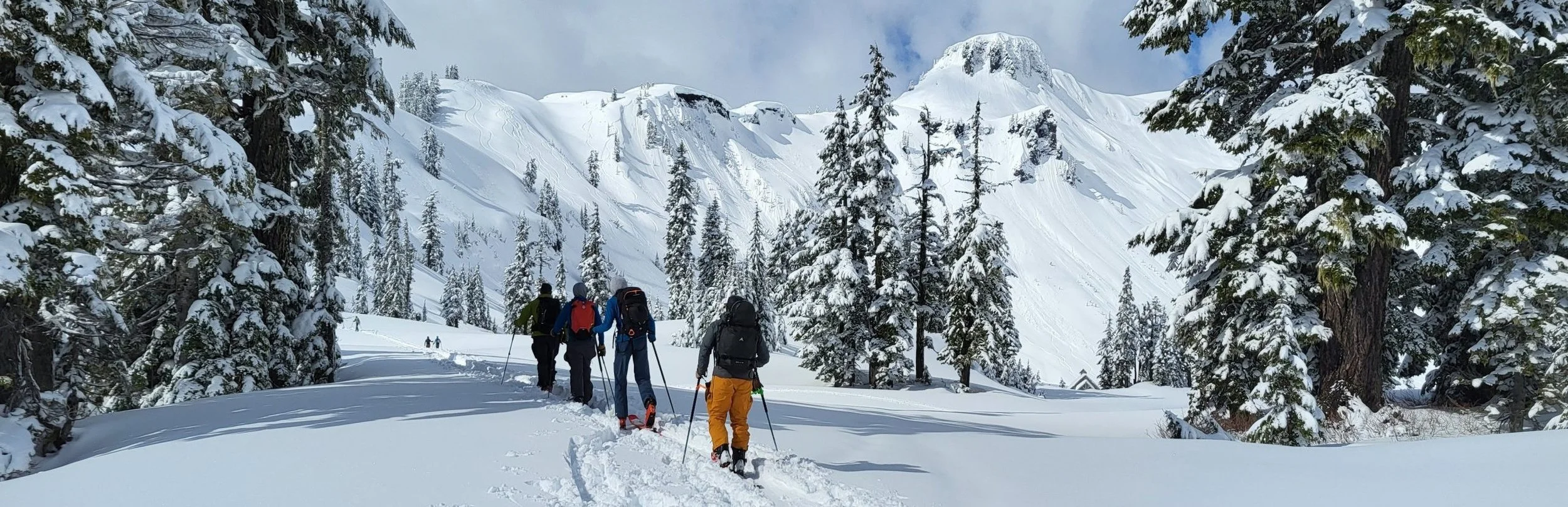
Courses are held in the Mount Washington region of New Hampshire's White Mountains.
The objective is not to expose students unnecessarily to avalanche hazard. Field locations are selected to create an appropriate setting for realistic rescue practice while accounting for current conditions.
Snow surface, weather, terrain, equipment, communication, and movement all influence the rescue process.
Practicing outdoors in winter conditions makes it possible to work on more than the electronics of a beacon search.
Train With an IFMGA Mountain Guide
The course is taught by Paul Rachele, an IFMGA Mountain Guide and AIARE Course Leader with experience in avalanche education, ski guiding, avalanche forecasting, and technical mountain rescue systems.
Instruction focuses on giving students repeated practice and specific feedback rather than simply demonstrating the rescue sequence.
The objective is measurable improvement during the day and a clear system for continued practice afterward.
Common Questions about the Avalanche Rescue Course
-
No. AIARE Avalanche Rescue has no previous avalanche-course prerequisite. It can be taken before or after AIARE 1.
-
Yes. An approved Avalanche Rescue course is part of the prerequisite progression for AIARE 2. Students preparing for AIARE 2 should arrive with well-practiced rescue skills so the advanced course can concentrate on terrain, conditions, uncertainty, and leadership.
-
No. Transceiver searching is an important part of companion rescue, but the course also includes probing, shoveling, scene assessment, communication, organization, and complete rescue scenarios.
-
Yes. Experienced students can work on efficiency, realistic scenarios, team rescue, current techniques, and specific weaknesses identified through instructor feedback.
-
Practice regularly. The course includes instruction on designing realistic rescue scenarios so you can continue working on search, probing, excavation, communication, and overall response time after the class.
-
Avalanche Rescue concentrates specifically on what to do after someone has been caught and buried. AIARE 1 is broader and focuses primarily on planning trips, identifying avalanche terrain, applying a risk-management framework, and making terrain decisions. If you are comparing the entire recreational progression, see our New Hampshire avalanche course guide.
Build Better Avalanche Rescue Skills
A companion rescue is a high-consequence task that depends on practiced skills.
This course gives you the opportunity to perform the complete rescue process repeatedly, receive professional feedback, and leave with a plan for keeping those skills sharp.

2026/27 Course Dates
December 14
December 21
January 11
January 18
February 8
February 15
March 8
March 15
Contact Core if a course is full or to schedule private dates.